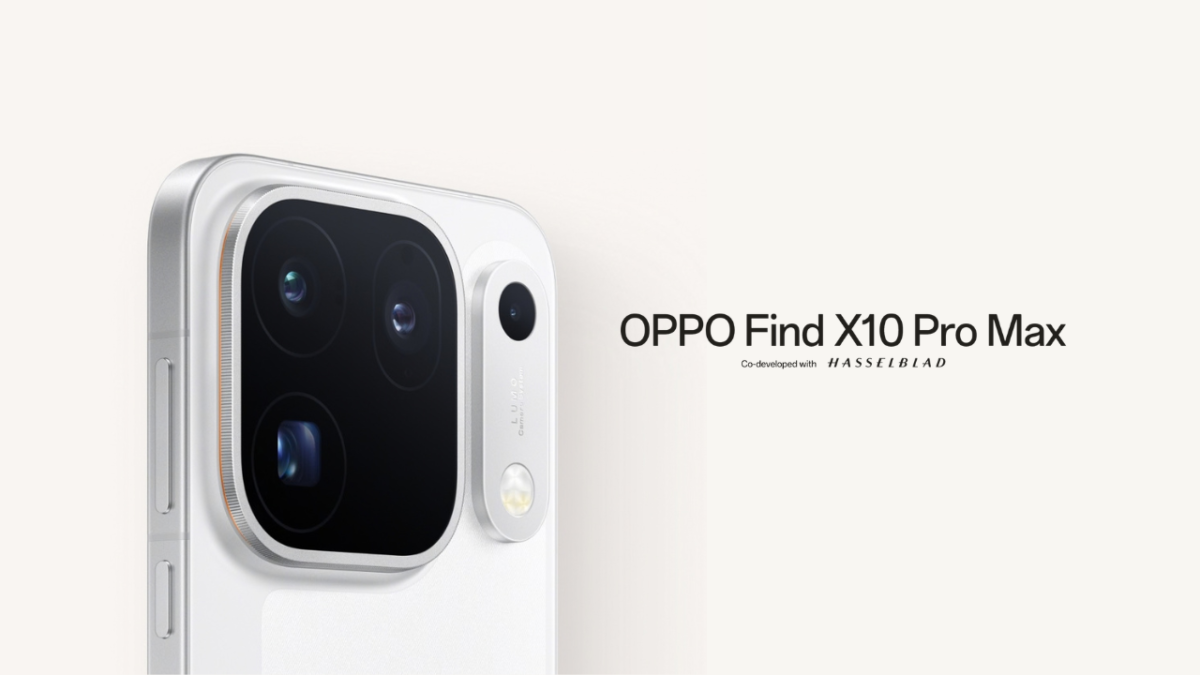
OPPO has pushed 200MP beyond the usual single showcase camera. The Find X10 Pro Max uses 200-megapixel sensors for its main, ultrawide, and telephoto cameras, making it the first smartphone with three 200MP rear cameras, according to The Verge.
The phone launched in China on September 22. It starts at CNY 6,799 (about PHP 63,000) for the 12GB+256GB version and reaches CNY 8,999 (about PHP 84,000) with 16GB+1TB.
Putting 200MP behind all three focal lengths is the bigger change. Last year’s Find X9 Pro used a 200MP telephoto camera, but its main and ultrawide cameras remained at 50MP. The Find X10 Pro Max extends the high-resolution treatment across the complete rear trio instead.
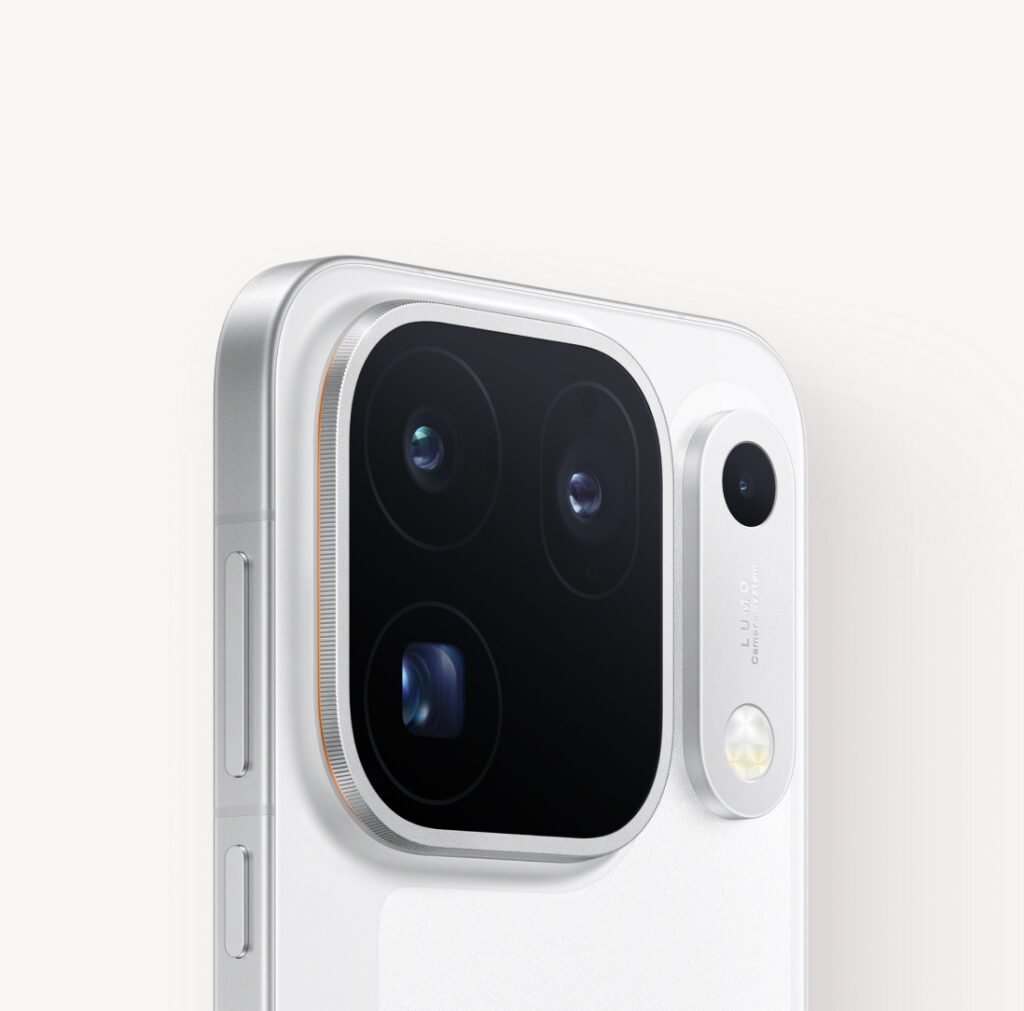
The main camera has a 1/1.3-inch 200MP sensor, an f/1.5 aperture, a 24mm-equivalent focal length, and optical image stabilization. OPPO says its DeepPix sensor technology gives the camera up to 17 stops of dynamic range.
The 200MP ultrawide uses a 1/1.56-inch sensor with an f/2.2 aperture, 13mm-equivalent focal length, and 124-degree field of view. The 200MP telephoto also uses a 1/1.56-inch sensor, paired with an f/2.1 lens, 70mm-equivalent focal length, optical image stabilization, and a 10cm minimum focusing distance for close-up shots.
That does not mean the three cameras will necessarily produce identical image quality. Resolution is only one part of the equation, alongside sensor size, optics, stabilization, and image processing. What OPPO has changed is the usual hardware hierarchy where the ultrawide, in particular, often receives a substantially lower-resolution sensor than the primary camera.
Video recording reaches 8K at 30fps and 4K at up to 120fps. OPPO’s specifications also list HDR recording, stabilization, professional video modes, and up to 3x optical zoom during video. The 50-megapixel front camera can record 4K at up to 60fps.
OPPO is also selling a separate Hasselblad teleconverter kit for the Find X10 Pro Max, extending the camera-focused approach beyond the hardware built into the phone itself.
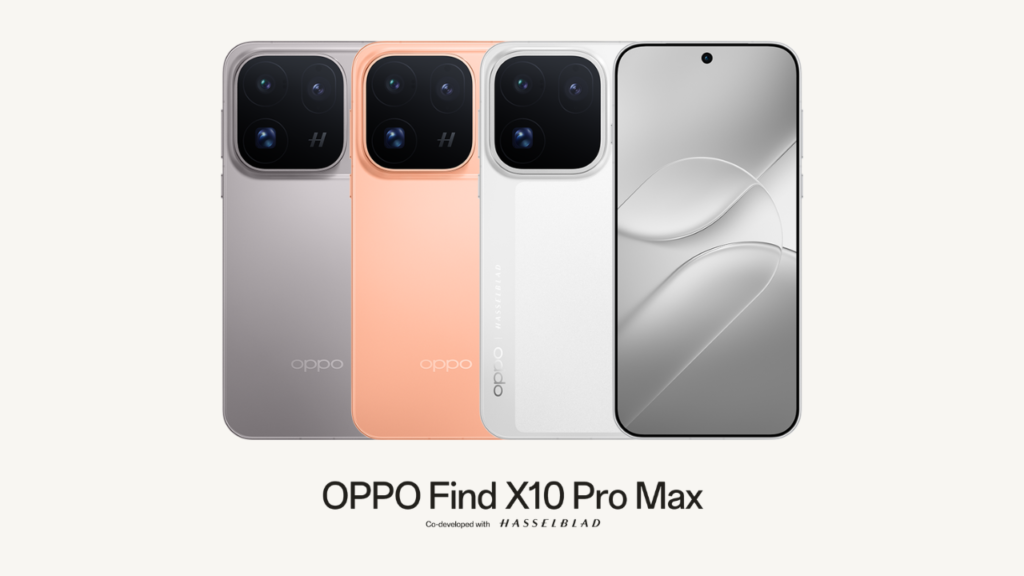
The rest of the specifications are firmly in flagship territory. A 6.78-inch flat display has a 2772×1272 resolution, 10-bit color, a 1–120Hz adaptive refresh rate, and up to 2,000 nits of stated peak brightness. Selected games can run the display at up to 144Hz.
MediaTek’s Dimensity 9600 Pro handles processing. The eight-core chip uses TSMC’s 2nm N2P manufacturing process and has two C2-Ultra CPU cores running at up to 4.55GHz alongside six performance cores. OPPO offers 12GB or 16GB of LPDDR5X RAM and 256GB, 512GB, or 1TB of UFS 4.1 storage.
Battery capacity reaches 8,000mAh, with support for up to 80W SuperVOOC or 80W UFCS wired charging and 50W wireless charging. The China model measures about 8.4mm thick and weighs between 233g and 235g depending on the finish.
OPPO Find X10 Pro Max specifications
| Specification | OPPO Find X10 Pro Max |
|---|---|
| Display | 6.78-inch flat display, 2772×1272, 1–120Hz, up to 144Hz in supported games |
| Processor | MediaTek Dimensity 9600 Pro |
| Process | TSMC 2nm N2P |
| RAM | 12GB or 16GB LPDDR5X |
| Storage | 256GB, 512GB, or 1TB UFS 4.1 |
| Main camera | 200MP, 1/1.3-inch, f/1.5, 24mm equivalent, OIS |
| Ultrawide camera | 200MP, 1/1.56-inch, f/2.2, 13mm equivalent, 124° |
| Telephoto camera | 200MP, 1/1.56-inch, f/2.1, 70mm equivalent, OIS |
| Front camera | 50MP, f/2.0, autofocus |
| Rear video | Up to 8K30 or 4K120 |
| Battery | 8,000mAh typical |
| Wired charging | Up to 80W SuperVOOC / 80W UFCS |
| Wireless charging | Up to 50W |
| Connectivity | 5G, Wi-Fi 7, Bluetooth 6.2, NFC, USB 3.2 Gen 1 |
| Biometrics | Ultrasonic in-display fingerprint sensor, face recognition |
| Software | ColorOS 17 |
| Dimensions | Approx. 161.32 × 76.57 × 8.40mm |
| Weight | Approx. 233–235g |
| China price | CNY 6,799–8,999 |
The table reflects specifications for the China-market PMX110 model. OPPO’s specification sheet lists four configurations: 12GB+256GB, 12GB+512GB, 16GB+512GB, and 16GB+1TB.
OPPO said before the China launch that the Find X10 Pro Max will also be released in international markets. Its announcement did not name the Philippines, however, so Philippine availability, configurations, and pricing remain unconfirmed.