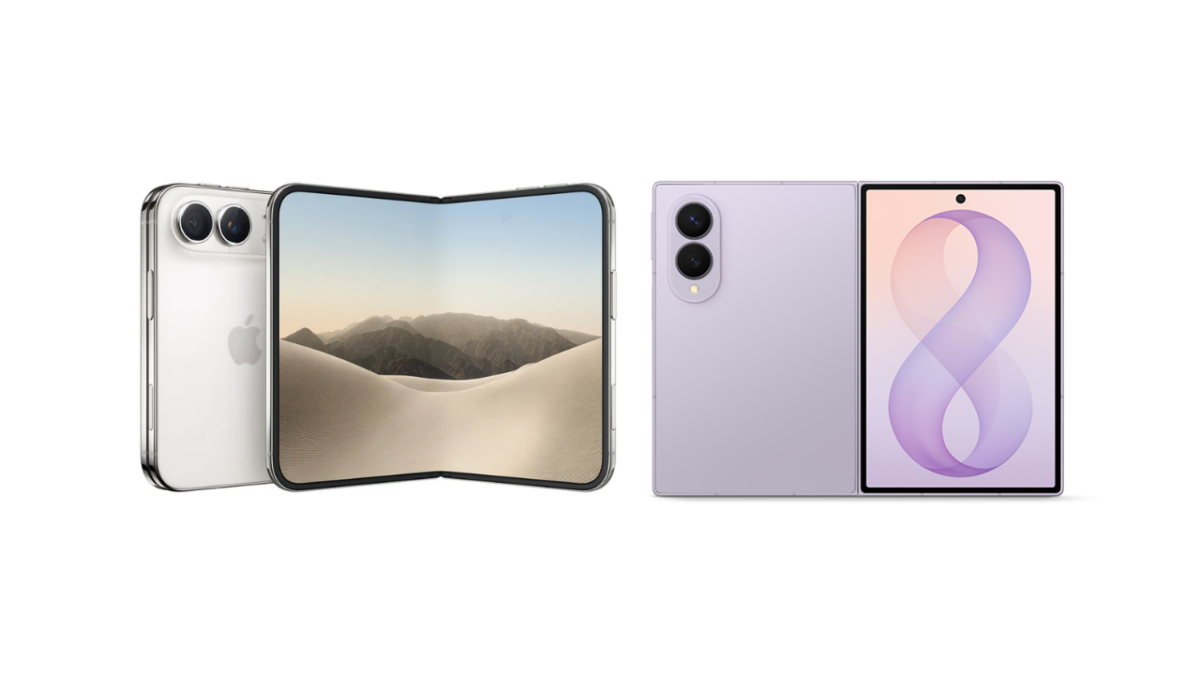
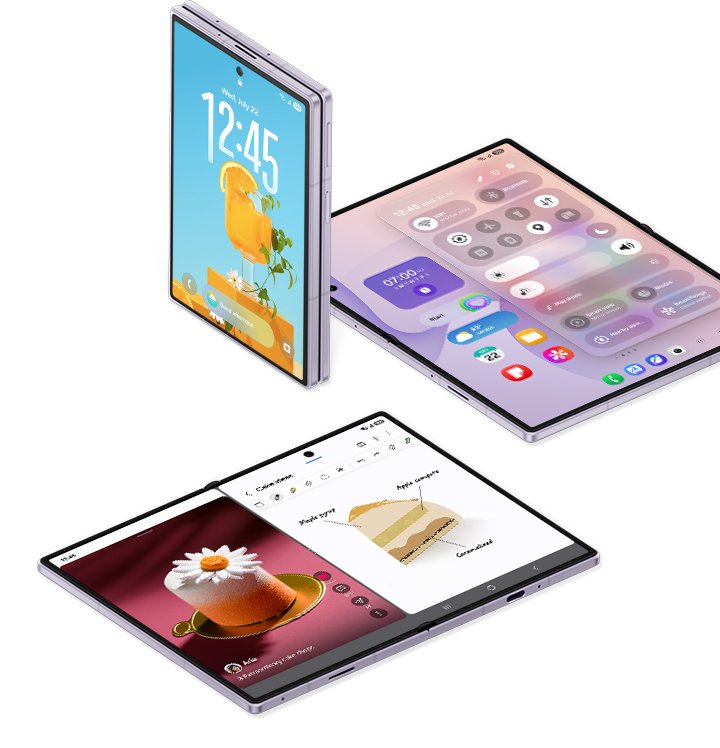
The Samsung Galaxy Z Fold8 and iPhone Duo look remarkably similar on paper. Both are book-style foldables with 7.6-inch inner displays, smaller screens outside, flagship processors and two rear cameras.
Look closer, however, and Samsung and Apple have made very different decisions about what a foldable phone should be.
The Galaxy Z Fold8 starts at PHP 109,990 for 256GB in the Philippines, while the equivalent iPhone Duo costs PHP 159,990 — a PHP 50,000 premium. Samsung’s phone is already available locally, while Apple’s Philippine store lists prices but currently says to check back later for availability.
| Galaxy Z Fold8 | iPhone Duo | |
|---|---|---|
| Starting price | PHP 109,990 | PHP 159,990 |
| Inner display | 7.6-inch, 120Hz | 7.6-inch, up to 120Hz |
| Outer display | 5.5-inch | 5.4-inch |
| Weight | 201g | 254g |
| Thickness, folded | 9.7mm | 11.3mm |
| Processor | Snapdragon 8 Elite Gen 5 for Galaxy | A20 Pro |
| Storage | 256GB–1TB | 256GB–2TB |
| Rear cameras | 50MP wide + 50MP ultra-wide | 48MP wide + 48MP ultra-wide |
| Water/dust resistance | IP48 | IP68 |
| Stylus | Not supported | Apple Pencil (USB-C), coming later in 2026 |
Apple hides the inner camera; Samsung does not
The most obvious difference appears when the phones are unfolded.
Samsung’s 7.6-inch Dynamic AMOLED 2X panel has a conventional camera hole containing a 10MP inner camera. Apple instead places its FaceTime camera underneath the display, leaving the 7.6-inch screen visually uninterrupted when the camera is not being used. Apple does not publish a megapixel figure for that camera, but lists an f/1.8 aperture and video recording at up to 1080p60.
Apple has also given the Duo’s folding display a nano-texture finish designed to reduce glare and make the crease less apparent. Its inner panel reaches 430ppi versus 403ppi on the Fold8, while both support adaptive refresh rates of up to 120Hz and peak outdoor brightness of up to 3,000 nits.
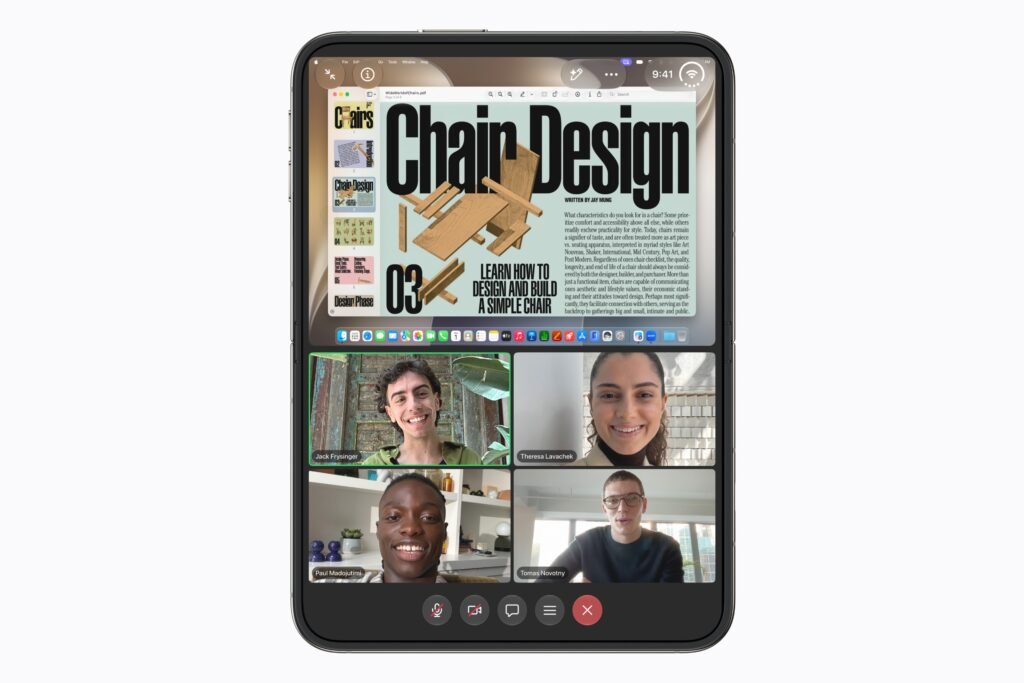
The Fold8 approaches the screen differently. Samsung uses a 4:3 inner aspect ratio paired with a 10:16 cover display, explicitly optimizing the two screens for different types of content. Apple’s inner and outer displays instead share the same general aspect ratio so content can scale more consistently when moving between them.
There is another reversal of expectations: the iPhone supports a stylus and the Galaxy does not. Apple says the USB-C Apple Pencil will work on both Duo displays later in 2026. Samsung has removed S Pen compatibility from the Fold8 entirely.
Samsung has a major advantage in weight
Apple’s more elaborate display construction comes inside a considerably heavier device.
The iPhone Duo weighs 254g, compared with just 201g for the Fold8 — a substantial 53g difference on something designed to be carried in a pocket.
Samsung is also thinner. The Fold8 measures 9.7mm closed and 4.5mm open, while the Duo measures 11.3mm closed and 5.2mm open. Apple’s phone is slightly wider but shorter when closed, at 84.1 × 117.8mm against Samsung’s 81.9 × 123.9mm.
Materials partly explain their different approaches. Apple uses a Grade 5 titanium frame and titanium hinge cover. Samsung uses an Armor Aluminum frame but reinforces the folding display structure with two titanium layers beneath it. Both manufacturers have also redesigned their hinges and internal display support specifically for repeated folding.
The Duo has a much stronger ingress-protection rating
Durability is one area where the specifications give Apple a clear technical distinction.
The iPhone Duo carries an IP68 rating, including resistance to dust and submersion in up to six meters of freshwater for 30 minutes under Apple’s specified test conditions. Samsung’s Fold8 is rated IP48 and is tested for immersion in up to 1.5 meters of freshwater for 30 minutes.
The difference is in the first digit as well as the second. An IP6 rating denotes the highest standardized level of protection against solid-particle ingress, while the Fold8’s IP4 rating provides substantially more limited protection from solids.
That does not make either folding screen indestructible. Apple’s inner panel still uses a flexible polymer cover layer, while Samsung ships its main display with a protective film that it specifically tells owners not to remove themselves.
Samsung still treats the big screen more like a computer
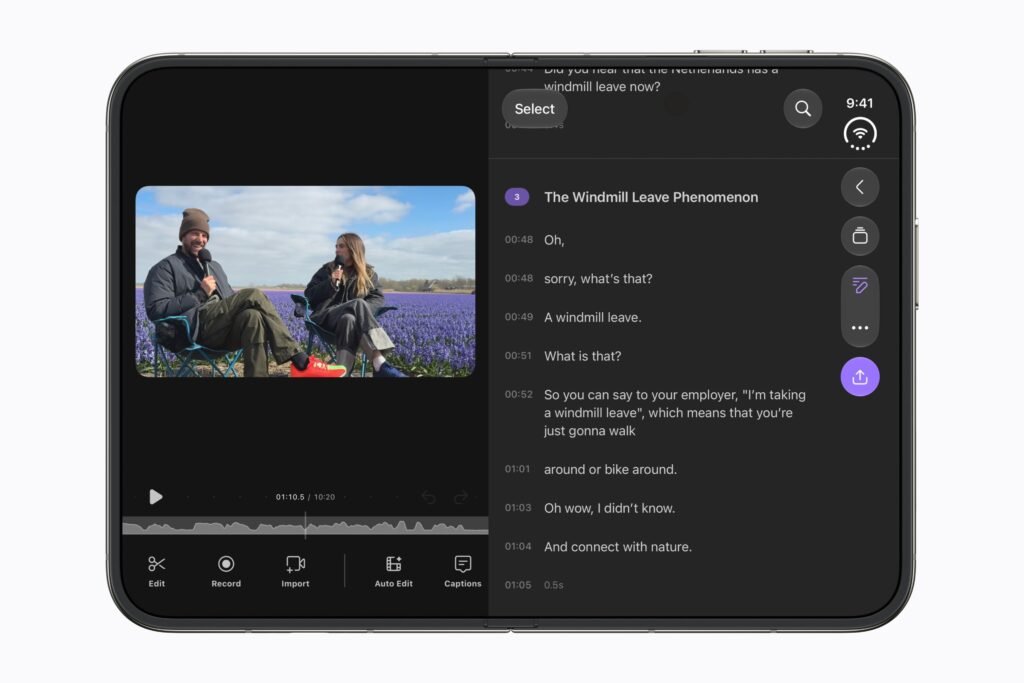
Apple has finally brought real multitasking to iPhone with the Duo.
iOS 27 allows two apps to run side by side through Split View, supports two windows from the same app, lets users switch apps within a split layout and can save app pairs. Apple has also redesigned parts of iOS around the larger canvas, including the Dock, Dynamic Island, navigation controls and StandBy.
Samsung nevertheless offers the more flexible desktop-like system. One UI 9 supports two- and three-app combinations, a persistent taskbar, drag-and-drop between windows and saved App Pairs. Apps can also run as floating windows, while Samsung DeX allows the Fold8 to provide a desktop-style environment when connected to an external display.
That difference may matter more than processor specifications for someone buying a foldable primarily for productivity.
The Fold8 runs Qualcomm’s Snapdragon 8 Elite Gen 5 for Galaxy with 12GB RAM on 256GB and 512GB models, or 16GB with 1TB. Apple uses the 2nm A20 Pro with a six-core CPU, seven-core GPU and dual 16-core Neural Engine, but does not publish the Duo’s RAM capacity. Without independent cross-platform testing, the specifications alone are not enough to establish which is faster in real use.
Both compromise on telephoto photography
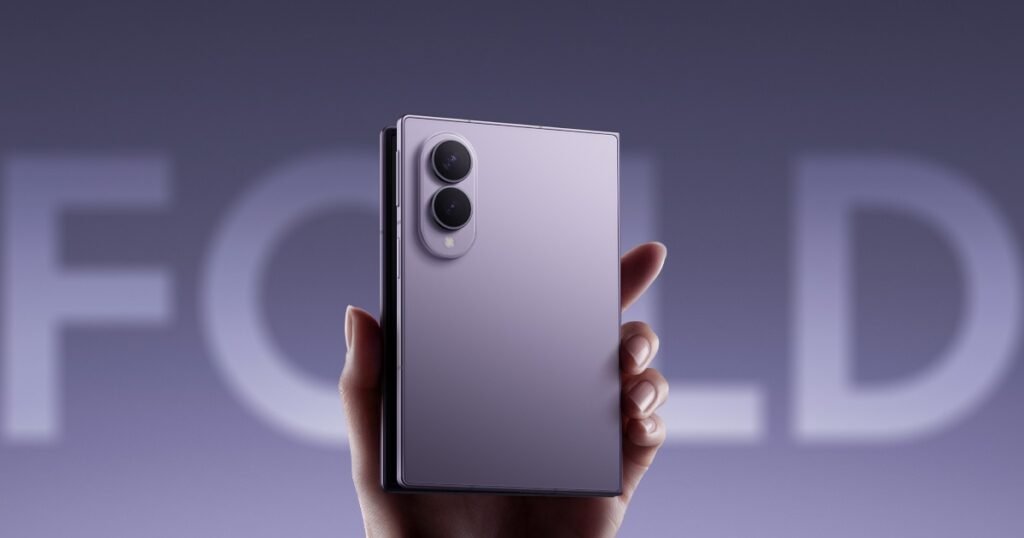
Neither device carries the full camera system of its manufacturer’s conventional ultra-premium flagship.
The Fold8 gets 50MP wide and 50MP ultra-wide rear cameras. The iPhone Duo uses a 48MP Fusion Main and 48MP Fusion Ultra Wide. Both generate a 2x “optical-quality” view by cropping their high-resolution main sensors rather than using a dedicated telephoto lens, and both offer digital zoom up to 10x.
Their video strengths differ. Samsung records up to 8K30, while the Duo records up to 4K120 in Dolby Vision through its main camera. Apple’s outer display also houses a 12MP Center Stage camera, while Samsung uses a 10MP cover camera.
Both exploit the folding design for photography. Samsung can show a preview on the cover display while shooting with the rear cameras and supports Dual Recording. Apple’s Duo Preview similarly lets subjects see the shot on the outer display, while users can fold the Duo into different positions for hands-free capture.
Battery numbers are not directly comparable
Samsung publishes a 4,800mAh battery capacity and supports 45W wired charging, wireless charging and reverse wireless charging. It rates the Fold8 for up to 26 hours of video playback.
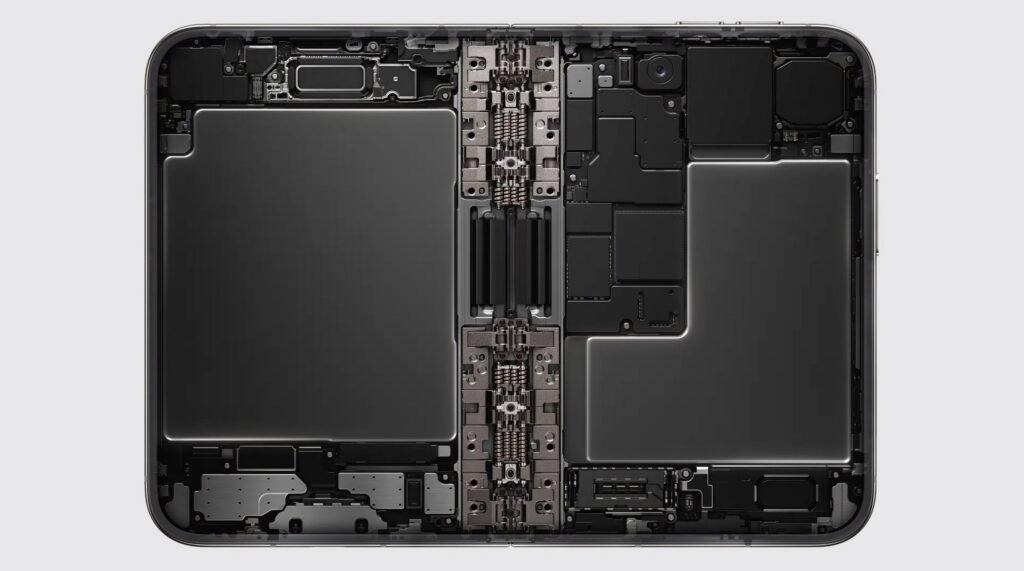
Apple uses one battery on each side of the Duo but does not disclose their combined capacity. It claims up to 31 hours of video playback on the inner screen and 44 hours using the outer display. The phone can reach 50% charge in around 20 minutes with a 60W-capable adapter, while MagSafe and Qi2 wireless charging reach 25W.
Those manufacturer endurance figures should not be compared as though they were results from the same battery test. Real-world testing will be needed to establish how the two behave under comparable workloads.
Samsung also has reverse wireless charging for accessories, something Apple does not list for the Duo.
The ecosystem differences run deeper than Android versus iOS
Both phones use side-mounted fingerprint authentication: Samsung places its fingerprint reader in the side button, while Apple has revived Touch ID rather than adapting Face ID to the folding form factor.
The Duo is also eSIM-only, supporting two active eSIMs with no physical SIM tray. Samsung’s Fold8 supports a physical SIM plus eSIM or dual eSIM configurations, depending on the setup. That distinction could matter to frequent travelers or Philippine users who still move physical SIMs between devices.
Both support 5G, Wi-Fi 7, UWB, NFC and display output through USB-C. Samsung adds its established Galaxy ecosystem and DeX, while the Duo brings MagSafe, Apple Watch unlocking, Continuity and the broader iPhone ecosystem to a foldable for the first time.
Samsung also formally promises up to seven generations of operating-system upgrades and seven years of security updates for the Fold8. Apple does not publish an equivalent fixed number of years for the Duo.
A PHP 50,000 difference buys two different ideas
The Fold8’s PHP 109,990 starting price makes it substantially cheaper than the PHP 159,990 Duo before considering Samsung’s frequent trade-in and installment promotions. It is also much lighter, thinner and equipped with a more mature multitasking environment.
The Duo’s premium buys some features Samsung’s Fold8 does not have: an under-display inner camera, IP68 protection, Apple Pencil support, MagSafe and storage configurations reaching 2TB. Its inner display is also built around Apple’s unusual nano-texture treatment and a camera hidden beneath the panel.
For someone already invested heavily in either ecosystem, Android versus iOS may ultimately outweigh many of those specifications. But these are not simply equivalent foldables separated by software. Samsung has spent eight generations making its Fold lighter and more computer-like, while Apple’s first attempt emphasizes an uninterrupted display, stronger ingress protection and adapting familiar iPhone behavior to a folding form.